Do you need winter tires in Baku, or are all‑weather tires enough?
How summer, winter and all-weather tires handle Baku's mild winter, what the 45°F (7°C) rule means and which tires to choose for winter trips to the mountains.
- Published
- Reading time
- 4 minutes
Short answer
If you only drive in Baku, all-weather tires, which carry the three-peak mountain snowflake symbol (3PMSF), are usually enough: snow rarely stays on the ground for long in the city, but winter mornings are often colder than 45°F (7°C), and summer tire rubber stiffens at that temperature. If you regularly drive on snowy or icy mountain roads around Quba, Qusar, Gabala or Shamakhi, including routes to Shahdag, use winter tires on all four wheels. If you use summer tires through winter, drive carefully on cold mornings and leave the car parked whenever there is snow or ice on the road.
In this post5 sections
Winters in Baku are short and mild. The average January temperature is about 41°F (5°C), and snow usually doesn't stay on the ground for long. Your choice depends on winter road conditions and whether you drive mountain routes.
Why do summer tires lose grip in the cold?
Grip depends heavily on how soft the rubber is. Summer tires use a compound designed for grip on warm pavement. Below about 45°F (7°C), that compound stiffens noticeably, reducing grip and increasing stopping distances. Winter tire rubber stays soft even below freezing, and the many small slits in the tread, called sipes, help it bite into snow and wet ice.
Winter mornings in Baku are often colder than 45°F (7°C), and at night the temperature drops close to freezing. Bridges and overpasses cool faster than the rest of the road, so ice can form there first. On snow and ice, summer tires have much longer stopping distances than winter tires, and steering response is poorer.
What do winter tires give up in warm weather?
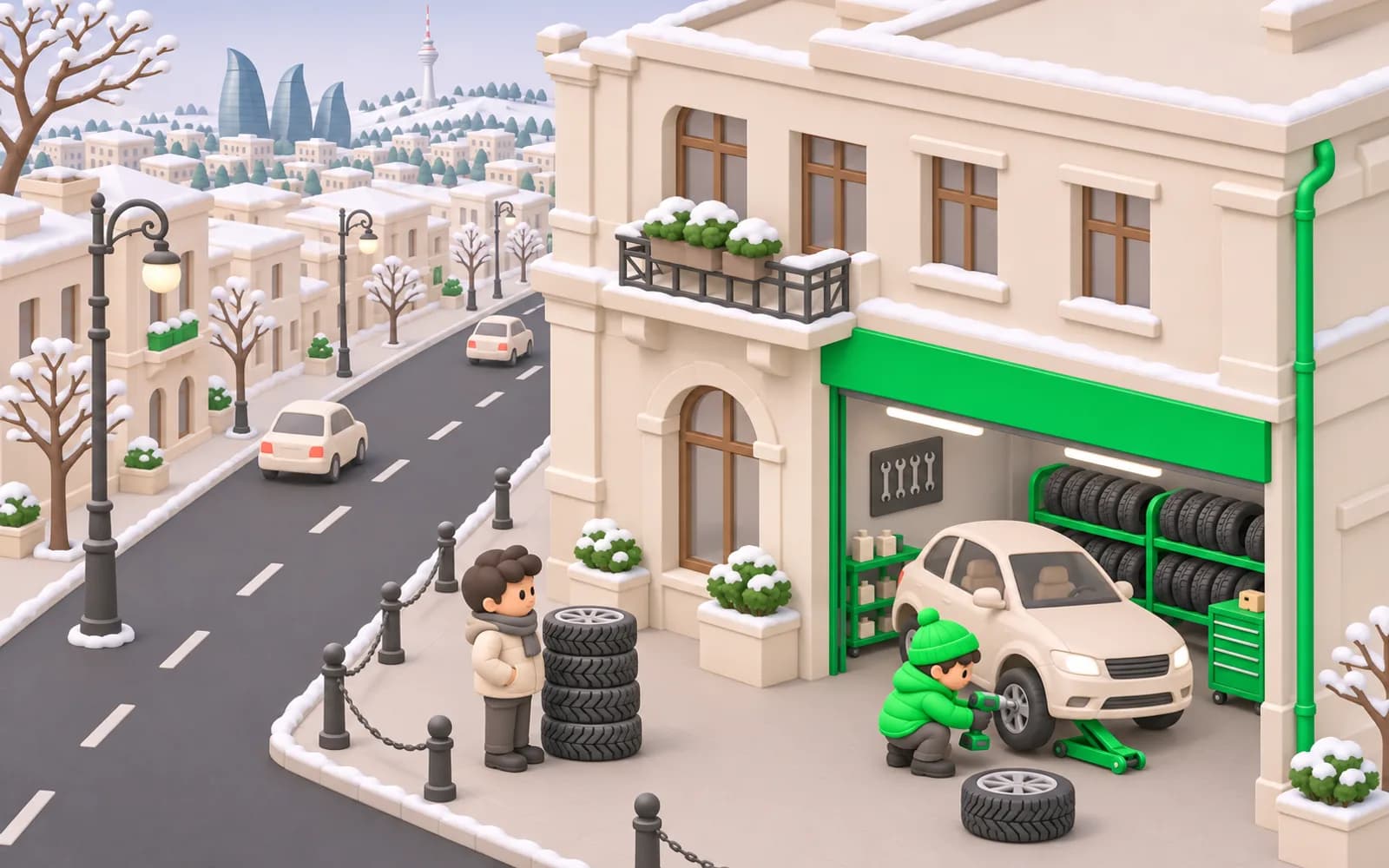
The soft rubber of a winter tire wears quickly on warm pavement. On a dry, warm road it steers less precisely and takes longer to stop than a summer tire. Put winter tires on once temperatures stay below 45°F (7°C), and switch back to summer tires when it warms up. This is the 45°F (7°C) rule.
Choosing winter tires means owning a second set. You will need a trip to the tire shop every season and a place to store the set you are not using. That cost pays off if you often drive on snow and ice.
Who should buy all-weather tires?
All-weather tires sit between summer and winter tires. Unlike regular all-season tires, they carry the 3PMSF symbol for snow. When you buy, check the markings on the sidewall:
- M+S. Means the tread is designed for mud and snow. The manufacturer applies this marking itself, and no standardized snow test is required for it.
- 3PMSF, a snowflake inside a three-peak mountain. Means the tire passed a standardized snow test and did better than a reference tire. The test does not measure grip on ice.
If you mostly drive in Baku and don't head into the mountains when it snows, all-weather tires with the 3PMSF symbol are a sensible choice, especially if you have nowhere to store a second set. They have weak spots of their own: on hot, dry pavement their stopping distances are longer than a summer tire's, and in deep snow or on ice a winter tire grips better. We explain every marking on a tire in our guide to tire sidewall markings.
What do you need for winter trips to the mountains?
Snow lasts longer in the mountains than in the lowlands. Before driving mountain roads around Quba, Qusar, Gabala or Shamakhi, check for snow and ice warnings. If you regularly drive snowy or icy roads to Shahdag or over mountain passes in winter, you need winter tires. When you buy them, check that the sidewall carries the 3PMSF symbol too.
Install winter tires on all four wheels. With winter tires on only one axle, the front and rear tires grip differently, and the car can slide in a turn or under braking.
For snowy mountain roads, it also helps to carry tire chains. Put them on the drive wheels. Don't exceed the chain maker's maximum speed, which is usually 50 km/h (about 30 mph). Before buying chains, check your owner's manual to see whether your car allows them: some wheel and tire combinations do not leave enough clearance for chains between the tire and the suspension. Practice putting the chains on and taking them off before the trip, make sure they are the right size for your tires and remove them as soon as you reach clear pavement.
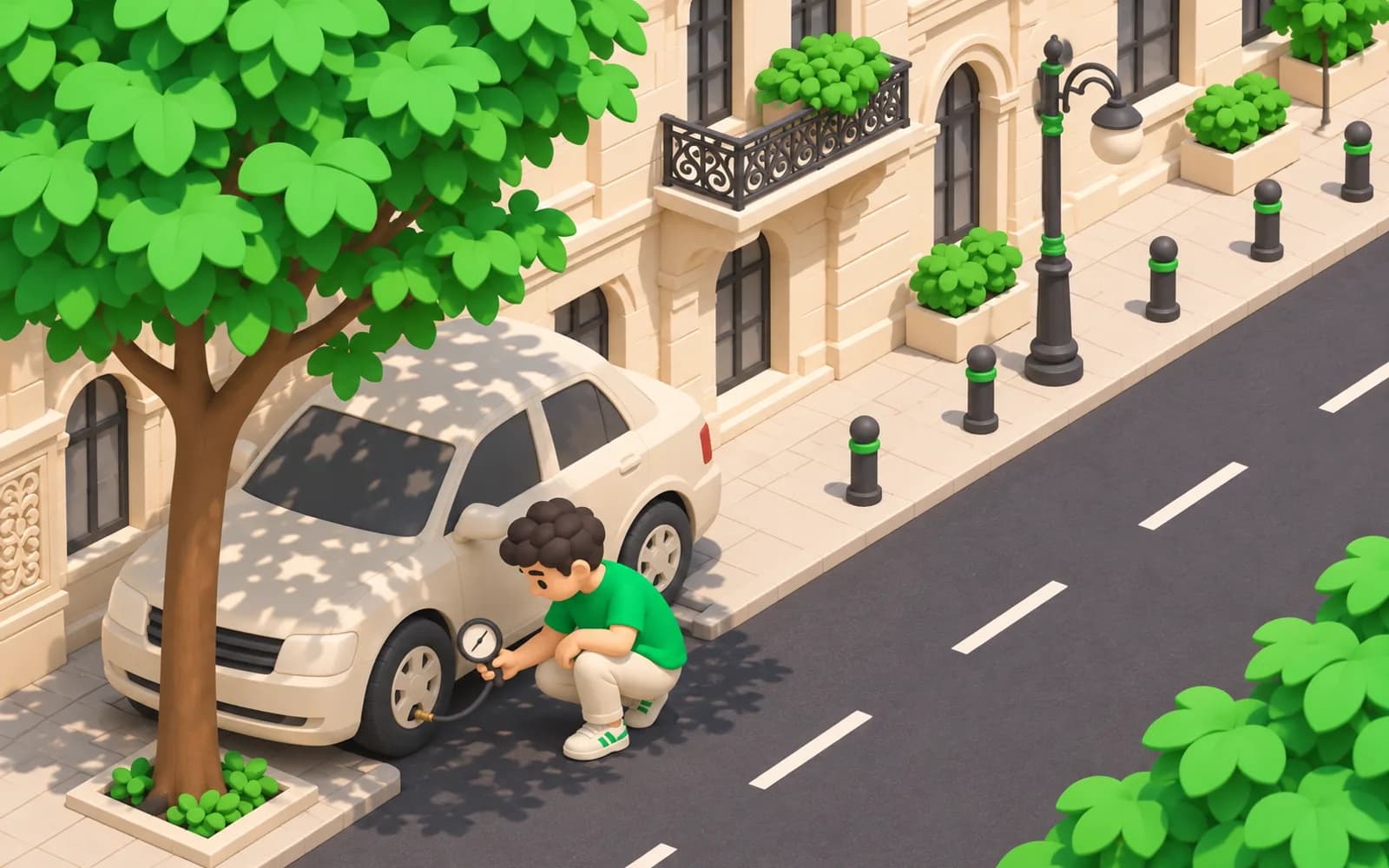
Note. Tire pressure drops in cold weather. Check it monthly when the tires are cold, and inflate them to the pressure listed on the placard on the driver's door jamb.
Which should you choose?
| How you drive | Best fit |
|---|---|
| Only above 45°F (7°C), with no snow or ice on the road | Summer tires |
| Daily Baku driving in mostly mild winter conditions (taxi, commute) | All-weather tires (3PMSF) |
| Often on snowy or icy mountain roads around Quba, Qusar, Gabala or Shamakhi in winter | Winter tires, switching back to summer tires in spring |
If you use summer tires through winter, slow down on cold mornings and increase your following distance. Leave the car parked whenever there is snow or ice on the road. Compare winter tire prices in your size from Baku sellers.