Tire sidewall markings: how to read them
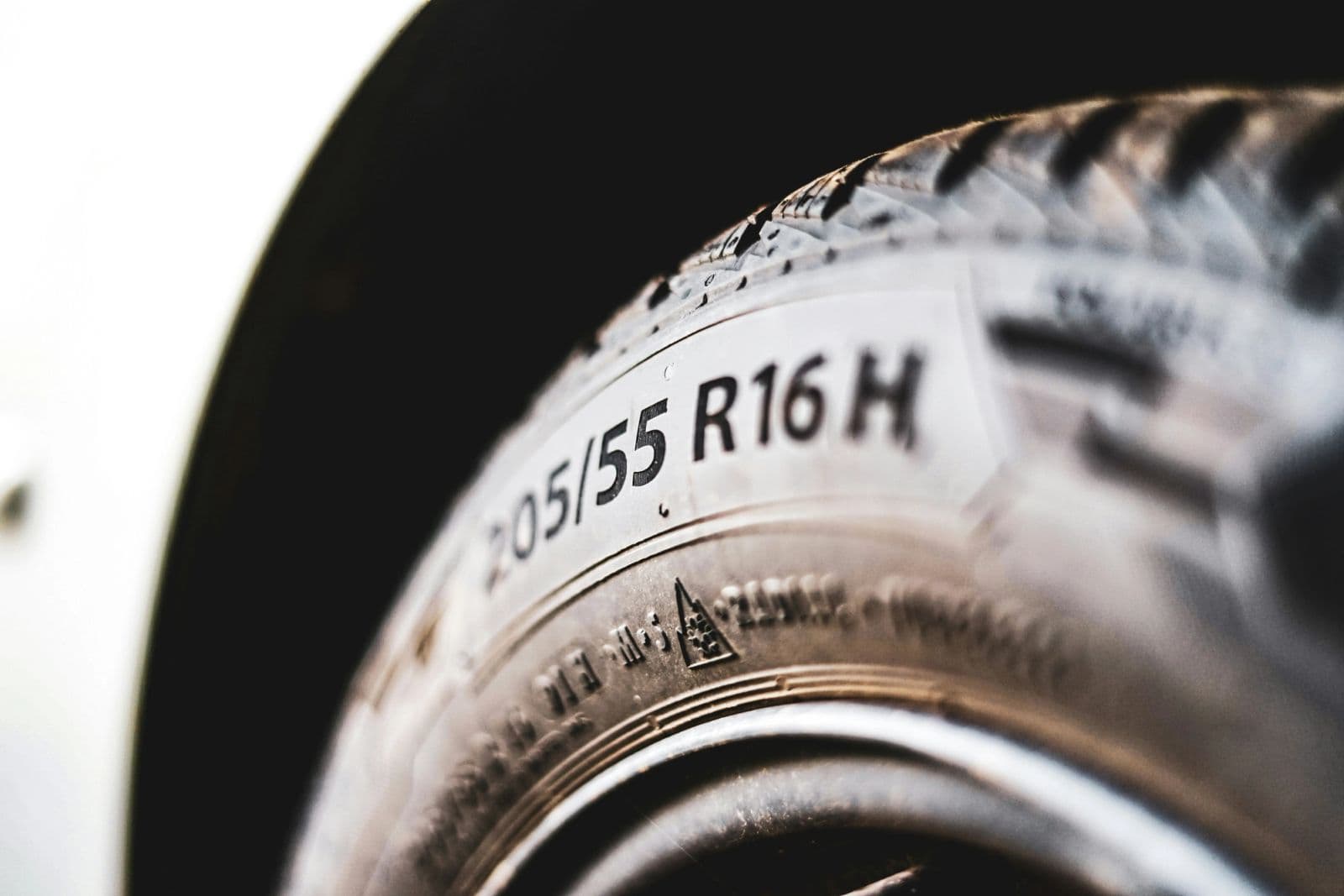
Every tire carries combinations of numbers and letters that describe its specs. These markings help you understand the tire's technical details and matter when you choose one. You don't need to memorize them all, but knowing the main ones makes choosing much easier.
The main markings
A standard code on a tire's sidewall looks like this: 175/70 R13 82T
- 175 is the tire's width in millimeters.
- 70 is the aspect ratio, the sidewall height as a percentage of the width. Here the height is 70% of 175 mm, or 122.5 mm.
- R means radial construction. In a radial tire, the carcass cords run parallel to one another. You may also see D (bias-ply) or B.
- 13 is the rim diameter in inches.
- 82 is the load index, which shows the maximum load the tire can carry. Every index and its load in kilograms is in the load index chart.
- T is the speed rating, which shows the maximum speed the tire can safely handle. The full list of letters is in the speed rating chart.
We explain each part of the size code, with worked examples, in our guide to reading tire sizes. In codes like 185R14C102Q, the letter C marks a reinforced tire built for heavier loads.
Other markings and what they mean
- TUBE TYPE: a tire that needs an inner tube.
- TUBELESS: a tubeless tire.
- TREADWEAR 180: how well the tread resists wear. The higher the number, the longer the tire lasts.
- TRACTION A: the tire's grip on the road. A is the highest grade, B is medium and C is the lowest.
- TEMPERATURE A: how well the tire resists high temperatures.
- DOT: a mark that the tire meets US quality standards.
- M+S: tires designed for mud and snow.
- ROTATION: an arrow showing which way the tire should turn.
- MAX LOAD: the maximum load the tire can carry.
- MAX PRESSURE: the maximum air pressure in the tire.
Markings for correct mounting
- RIGHT: a tire for the right side.
- LEFT: a tire for the left side.
- INSIDE: the inner side of the tire.
- OUTSIDE: the outer side of the tire.
US tire markings
The DOT code appears on tires that meet US Department of Transportation standards. For example, DOT XEE0 T255 2015 tells you the following:
- XEE0: the plant and size (a Pirelli plant in Brazil).
- T255: the tire's model and batch code.
- 2015: the production date, week 20 of 2015.
P-metric and Euro-metric systems
- P: tires for passenger cars.
- LT: for light trucks and vans.
- T: a temporary spare tire.
In 30x9.5R15LT, for example, 30 is the tire's overall diameter in inches, 9.5 is the section width, R means radial construction, 15 is the rim diameter, and LT means the tire is made for light trucks.
The bottom line
You don't need to memorize all of these markings, but knowing the main ones will help a lot when you choose tires. If you know your size, compare offers in that size on the tire search page.
More articles
Wheel balancing: what it is and how it's done
If your steering wheel shakes, unbalanced wheels may be the cause. We explain why balancing matters, the warning signs and how a shop does it.

7 most common mistakes drivers make when changing a tire
The jack in the wrong spot, lug bolts tightened the wrong way and other common mistakes. Here's what to watch for when you change a tire yourself.
When should you replace your tires?
Tread depth, uneven wear, cracks: we explain the signs that your tires need replacing and what matters when you choose new ones.