Wheel balancing: what it is and how it's done
Picture this: you're driving at speed, but instead of a smooth ride you feel the steering wheel shake and the body vibrate. The farther you drive, the worse it gets. What's going on? The answer is simple: your wheels are out of balance.
Unbalanced wheels are more than a nuisance. They can wear out your tires faster, hurt handling and even raise fuel consumption. In this article we explain why wheel balancing matters, how it's done and the signs of a problem.
Why do wheels need balancing?
Wheel balancing is the process of distributing a wheel's mass evenly around its axis of rotation. Rims and tires may look perfectly round, but manufacturing leaves small flaws: one spot may be slightly thicker, another thinner. At high speeds these differences make the wheel spin unevenly. Balancing compensates for them.
Wheels can also go out of balance for these reasons:
- Tire and rim wear over time. Tread can wear unevenly, especially when the pressure is below spec, the suspension geometry is off or you drive aggressively. Rims can also lose their shape from hairline cracks, rust and road chemicals. All of this upsets the even distribution of mass.
- Poor tire mounting. If a tire is mounted carelessly, it may not seat evenly on the rim or may be poorly centered. Even a slight offset causes vibration and calls for balancing.
- Damage from impacts, such as hitting a curb or a pothole. This can bend the rim, cause a bulge in the tire or damage the cords inside. These defects may not be visible, but they cause serious imbalance. Sometimes balancing isn't enough after such an impact, and the tire needs repair or replacement.
- Seasonal tire changes. Tires can deform in storage, especially if they were stacked or kept somewhere damp. Lost or shifted wheel weights also cause imbalance.
All of these directly affect how your car behaves on the road and make driving less safe.
Signs of unbalanced wheels
Signs that a wheel is out of balance include:
- The steering wheel shakes at speeds above 60 km/h.
- The body vibrates while you drive.
- The tread wears unevenly or quickly.
- Handling gets worse, for example the car pulls to one side on a straight road.
- Fuel consumption rises for no obvious reason.
If you notice these signs, take your car to a tire shop. Even without them, wheels should be balanced regularly.
How often should wheels be balanced?
Experts recommend balancing every 10,000-15,000 km. Tires wear, and wheel weights can fall off. You should also have the balance checked after every seasonal tire change, after hitting a deep pothole or after any impact.
In winter and between seasons, snow and mud stuck to the wheels can also cause imbalance. In that case, washing the tires and rims is enough.
Types of balancing
- Static: removes the mass difference in one plane. It's used to reduce the wheel's vertical bounce.
- Dynamic: accounts for centrifugal forces and corrects imbalance in more than one plane. It needs more complex equipment.
- Final: done after the main balancing to remove any small flaws that remain.
Trucks and buses also use automatic balancing: special beads are poured into the tire, and as the vehicle moves, centrifugal force spreads them over the tire's inner surface and keeps the wheel balanced.
How is a wheel balanced?
- The wheel comes off the car so both sides are fully accessible and the suspension doesn't affect the measurement.
- The tire and rim are inspected for bulges, punctures, uneven wear, damage, rust and dirt.
- The wheel goes on the shaft of a balancing machine, where it's centered and clamped firmly so the readings are accurate.
- The machine spins the wheel at a set speed. Sensors record the vibration and find the out-of-balance spots and the weights needed.
- The technician attaches adhesive or clip-on wheel weights where they're needed.
- The wheel is spun again to check that it's balanced. If needed, further adjustments are made.
- The wheel goes back on the car, and the lug bolts are tightened to the right torque with a torque wrench.
FAQ
Can you drive on unbalanced wheels?
Driving on unbalanced wheels doesn't just cause vibration. It also wears out the tires, suspension and other key parts faster, and over time it can lead to serious failures.
Can I check the balance myself?
Wheel balance can only be checked at a specialized shop with professional equipment. Only that equipment gives an accurate and safe result.
How is balancing different from wheel alignment?
The two are often confused, but they're completely different. Balancing removes vibration by spreading the mass evenly around the wheel's axis of rotation. Alignment adjusts the angle and direction of the wheels and affects handling and stability. Both matter, and they complement each other.
The bottom line
Wheel balancing is an important part of safe, comfortable driving. Checking and balancing your wheels regularly makes the tires last longer and keeps the car handling well. Don't neglect it; your car will thank you.
More articles

Tire sidewall markings: how to read them
From 175/70 R13 82T to the DOT code, we explain every marking on a tire sidewall: size, load and speed ratings, TUBELESS, M+S and more.
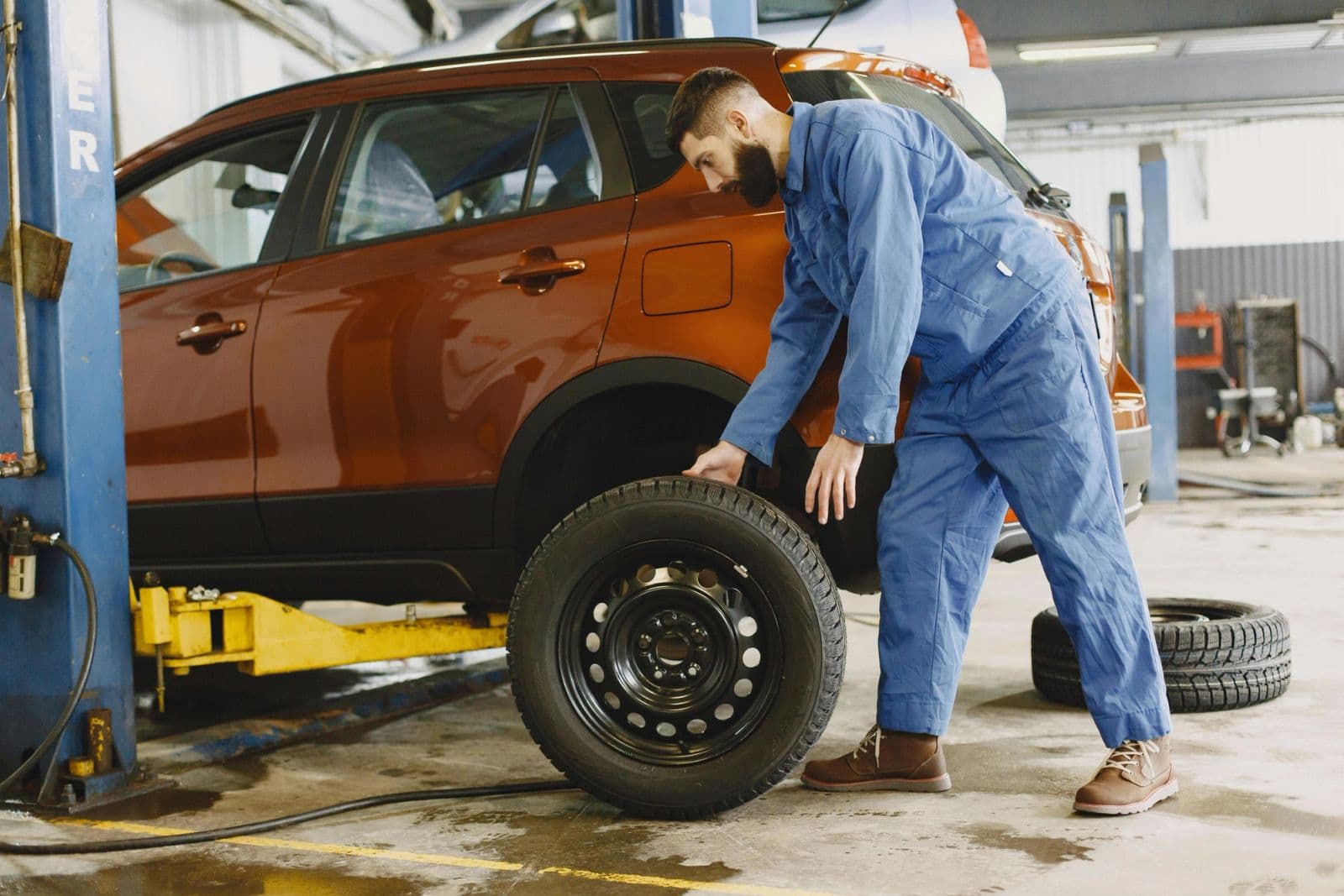
7 most common mistakes drivers make when changing a tire
The jack in the wrong spot, lug bolts tightened the wrong way and other common mistakes. Here's what to watch for when you change a tire yourself.
When should you replace your tires?
Tread depth, uneven wear, cracks: we explain the signs that your tires need replacing and what matters when you choose new ones.